
Casino Two-Factor Authentication: Choose Safer 2FA
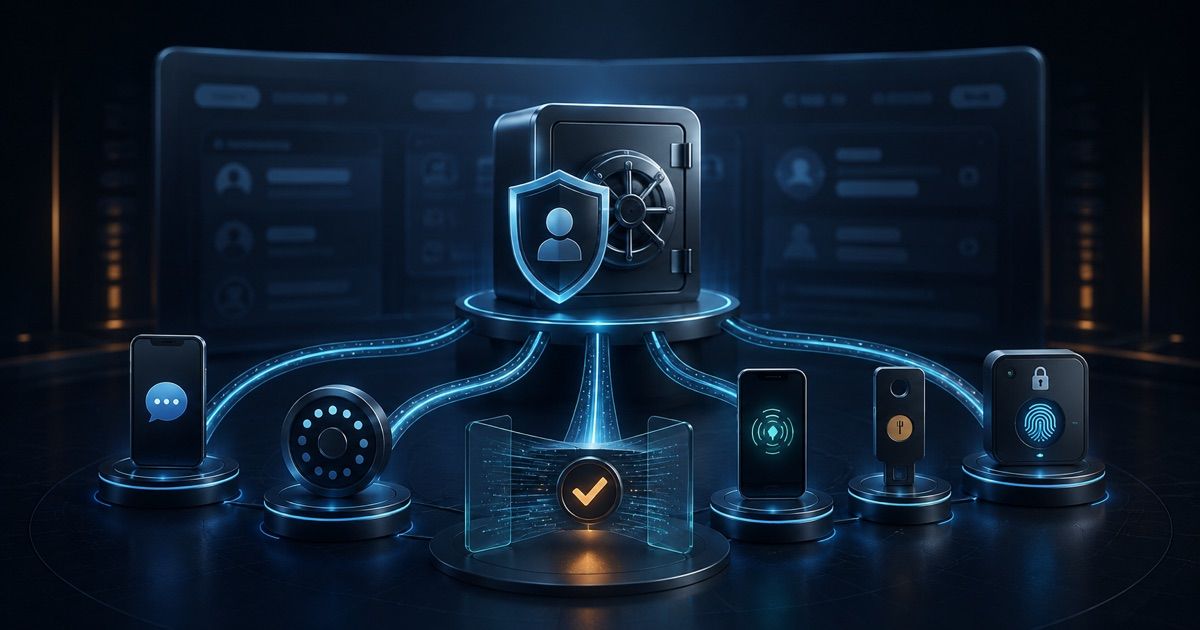
Casino two-factor authentication adds a second check when someone tries to enter your account. That matters because a casino profile can connect identity documents, payment details, transaction records and a withdrawable balance. But not every second factor offers the same protection. SMS, email codes, authenticator apps, push approvals, security keys and passkeys fail in different ways. This guide helps you compare the options, configure the strongest method the operator supports and keep a safe recovery route.
What casino two-factor authentication protects
A password proves something you know. A second factor usually proves something you have, such as a registered phone, authenticator app or cryptographic key. If a criminal obtains your password through reuse, malware or phishing, the additional check can stop a direct login.
KYC establishes who is allowed to use the account; 2FA checks whether a login or sensitive action is being approved with a registered authenticator.
Start with the broader online casino account security checklist: use a unique password, secure the connected email account and review active sessions and withdrawal details. Then treat 2FA as a second lock, not as permission to ignore the first one.
Compare casino 2FA methods
The best method is the strongest one that the casino genuinely supports and that you can recover without weakening the account.
| Method | What you approve or enter | Main strength | Main weakness | Practical verdict |
|---|---|---|---|---|
| SMS code | A short code sent to a phone number | Simple and widely understood | Exposed to number-porting, SIM-swap and message-delivery risks | Better than password-only, but choose a stronger option when available |
| Email code | A code sent to the account email | No separate app required | Weak if the same inbox can reset the casino password | Use only with a strongly protected email account |
| Authenticator app | A rotating one-time code generated on a device | Does not depend on mobile reception or a phone number | A code can still be entered into a phishing page | A strong practical choice when passkeys or keys are unavailable |
| Push approval | A prompt in a registered app | Fast and may show useful login context | Repeated prompts can pressure users into approving the wrong request | Prefer number matching or clear transaction details |
| Security key | A physical cryptographic device | Can bind approval to the real website and resist phishing | Requires compatible hardware and a backup plan | Excellent when the casino supports it |
| Passkey | A cryptographic sign-in unlocked on a device | No reusable casino password or typed one-time code | Support and cross-device recovery differ by provider | Usually the preferred consumer option when implemented well |
The current NIST authentication standard explains an important distinction: manually entered one-time codes are replay-resistant when correctly implemented, but they are not phishing-resistant because a fake site can relay the code to the real service. NIST describes WebAuthn, used by FIDO2 authenticators, as an example of verifier-name binding that can provide phishing resistance.
Choose the safest method available
Use this preference order as a decision aid, not as a claim that every casino offers every option.
- Choose a passkey or phishing-resistant security key if the operator supports it and explains recovery clearly. The FIDO Alliance consumer guidance describes FIDO sign-ins as based on credentials designed to reduce phishing and credential-reuse risk.
- Otherwise, choose an authenticator app. It works without SMS delivery and avoids tying the second factor to a transferable phone number.
- Use a well-designed push approval if it displays meaningful context or number matching. Never approve merely to stop repeated prompts.
- Use SMS if it is the strongest available option. Add a carrier account PIN or port-out protection where available and secure the phone account itself.
- Treat an email code as dependent on email security. If the inbox has a reused password or no 2FA, it may become both the password-reset route and the second-factor route.
The UK's National Cyber Security Centre says text messages are not the most secure type of two-step verification but still provide a major advantage over having none. Its 2-step verification guidance also notes that authenticator apps do not need mobile reception and recommends keeping backup codes for loss-of-phone scenarios. This is general cyber advice, not a gambling licence requirement.
ENISA similarly recommends enabling 2FA and, where available, using passkeys or other phishing-resistant authentication in its cyber hygiene guidance.
Set up 2FA without locking yourself out
Begin from a casino domain or app you have independently verified. Do not scan a setup QR code from an email, direct message or support chat unless the same request is confirmed inside the signed-in account.
Before enabling the feature, check six things:
- Which actions require 2FA: login, password reset, payment-detail change, withdrawal or all of them?
- Can you register two authenticators or a backup security key?
- Does the service issue one-time recovery codes?
- Can support disable 2FA, and what identity evidence would that require?
- Are existing sessions closed after an important security change?
Store recovery codes away from the device that holds the authenticator. A password manager with strong account protection or a securely stored offline copy may be suitable; an unprotected screenshot in a synced photo library is not. Never paste a seed, QR code or recovery code into ordinary notes, email or a support conversation.
If the casino requires an app, review its requested access using the casino app permissions guide. An authenticator app does not need access to casino messages or identity documents merely to generate a standard time-based code.
Do not approve an unexpected prompt
A login code is an access key for that moment. Casino support, a regulator or a payment provider should not need you to read it aloud or forward it in chat. If someone asks for the code after contacting you, stop and reach the casino through a verified channel.
Treat an unexpected push request the same way. Deny it, open the casino through your normal bookmark, inspect active sessions and change the password if compromise is plausible. Repeated prompts can be an attempt to create approval fatigue. The safe response is not to approve one just to make the notifications disappear.
Also verify the domain before entering an authenticator code. A rotating code is short-lived, but a real-time phishing page may relay it immediately. A padlock icon shows that the connection to the displayed domain is encrypted; it does not prove that the domain belongs to the casino.
If you see an unknown login, changed withdrawal address or unrecognised transaction, follow the ordered steps in the hacked casino account response. Preserve evidence before it disappears and contact payment providers only about transactions you genuinely did not authorise.
Change phones and recover access safely
Plan the move while the old authenticator still works. Add the new device through the casino's security settings, test a fresh login, save new recovery codes if the old set is replaced and then remove the old factor.
If the phone is already lost or stolen, first protect the connected email and mobile account. Use an existing recovery code or backup key if available. Contact the casino through details taken from its official site, ask what recovery evidence is required and record the case number. A legitimate recovery process may require identity verification; do not create a second casino account or send documents to an unofficial address to get around it.
After access returns, review registered devices, sessions, profile details, payment methods and withdrawal destinations. Rotate any exposed recovery codes and remove the missing authenticator. If the incident may involve information held by the operator rather than only your device, use the casino data breach response checklist to separate those two risks.
Run a seven-point casino 2FA test
You can assess the account controls without making a deposit:
- Verify the exact operator domain and open security settings directly.
- Record which 2FA methods are available; prefer passkeys or keys, then an app, then SMS or email.
- Confirm whether 2FA protects only login or also recovery and high-risk account changes.
- Save recovery codes securely and check whether a second authenticator can be added.
- Sign out, complete one normal login and confirm the prompt contains the expected context.
- Review the privacy notice for phone-number, device and authentication-data handling with the casino privacy policy checklist.
- Ask support how a lost factor is recovered and compare the written answer with the published policy.
Pause if support asks for a live code, cannot explain recovery, allows an important factor to be removed with only easily guessed information or sends setup instructions through an unverified channel.
Bottom line
Casino two-factor authentication is most useful when it protects both access and recovery. Prefer phishing-resistant passkeys or security keys where supported; otherwise, an authenticator app is usually a stronger practical choice than SMS or email. Keep backup access separate, never share a live code and verify every setup or recovery request through the official account.
18+ only. Gambling involves financial risk and is not a way to make money. Use responsible gambling tools and seek qualified local support if play becomes difficult to control. Affiliate disclosure: CasinosChoice may receive a commission from selected partner links, but that does not change the need to verify security, terms and suitability independently.
Related articles
- Progressive Jackpot Eligibility: What to Check
Check jackpot entry settings, qualifying stakes, funding balances and prize levels before playing, with practical questions and a clear cost example.
- Gambling Blocking Software: A Device Setup Checklist
Choose gambling blocking software by device coverage, restriction rules and support, then follow a practical setup and maintenance checklist.
- Stablecoin Casino Risks: USDT and USDC Safety Checks
Understand stablecoin value, issuer controls and casino balance conversion, with practical questions to check before depositing USDT or USDC.